
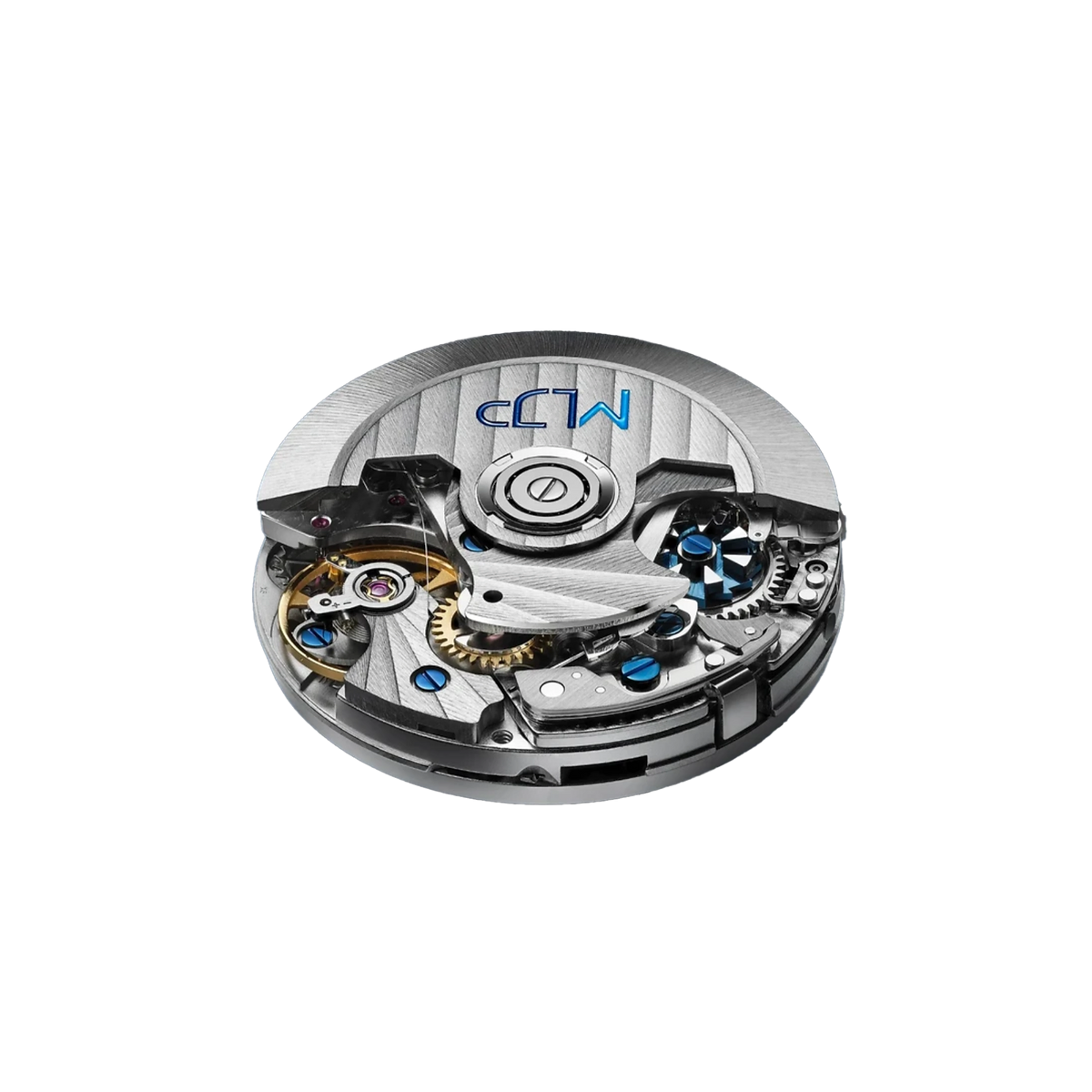
How many parts are there in a mechanical movement?
The most obvious difference between a mechanical movement and a quartz movement is the power source. A quartz movement is powered by a battery, whereas the mechanical movement is driven by a mainspring that must be periodically wound either manually or by a self-winding mechanism. The force stored in the mainspring is then transmitted through a series of gears to power the balance wheel, a weighted wheel that oscillates at a constant speed.
Making a mechanical movement is no easy task, as all parts in the movement must work in perfect harmony just to make the watch run. When you take into account that they also have to do it at a very particular and consistent rate to keep time, it is easy to understand why many people consider horology an art.
The video below shows you (in a simplified way) how a mechanical movement works in a watch with three hands. The video at the end of this article goes more in depth.
Source: Giacomo Ciurlo, DensityDesign Research Lab
The more complications your watch has, the more advanced its movement will be. In the movement of our Von Doren - URÆD a total of 171 parts are working together to display the day, date, hours, minutes and seconds.
171 parts where each one has its own task that it meticulously executes every day for a lifetime. This is why, given the correct care, your URÆD watch is likely to outlive you.
 Snip from the STP 4-13 technical package.
This is the movement in Von Doren - URÆD.
Watch the video below to learn more about the components in a mechanical movement and how they work together:


Leave a comment
This site is protected by hCaptcha and the hCaptcha Privacy Policy and Terms of Service apply.