
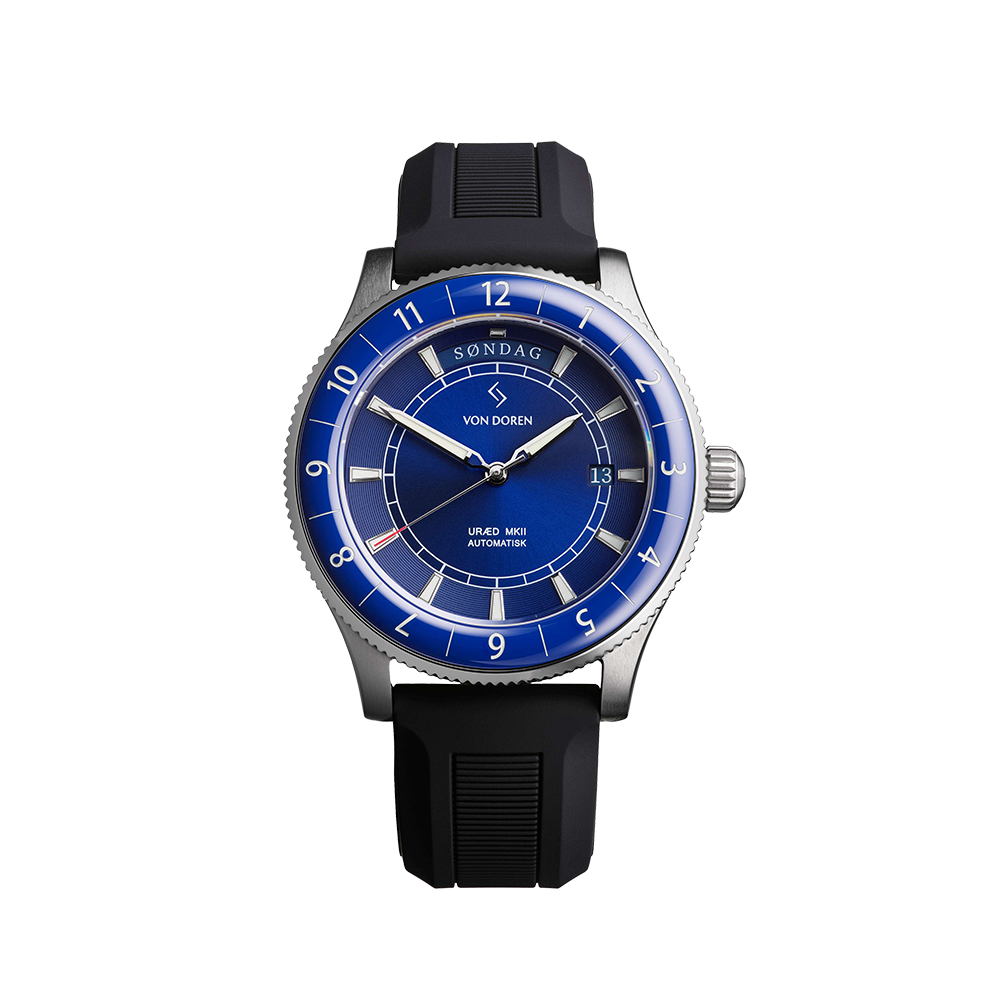
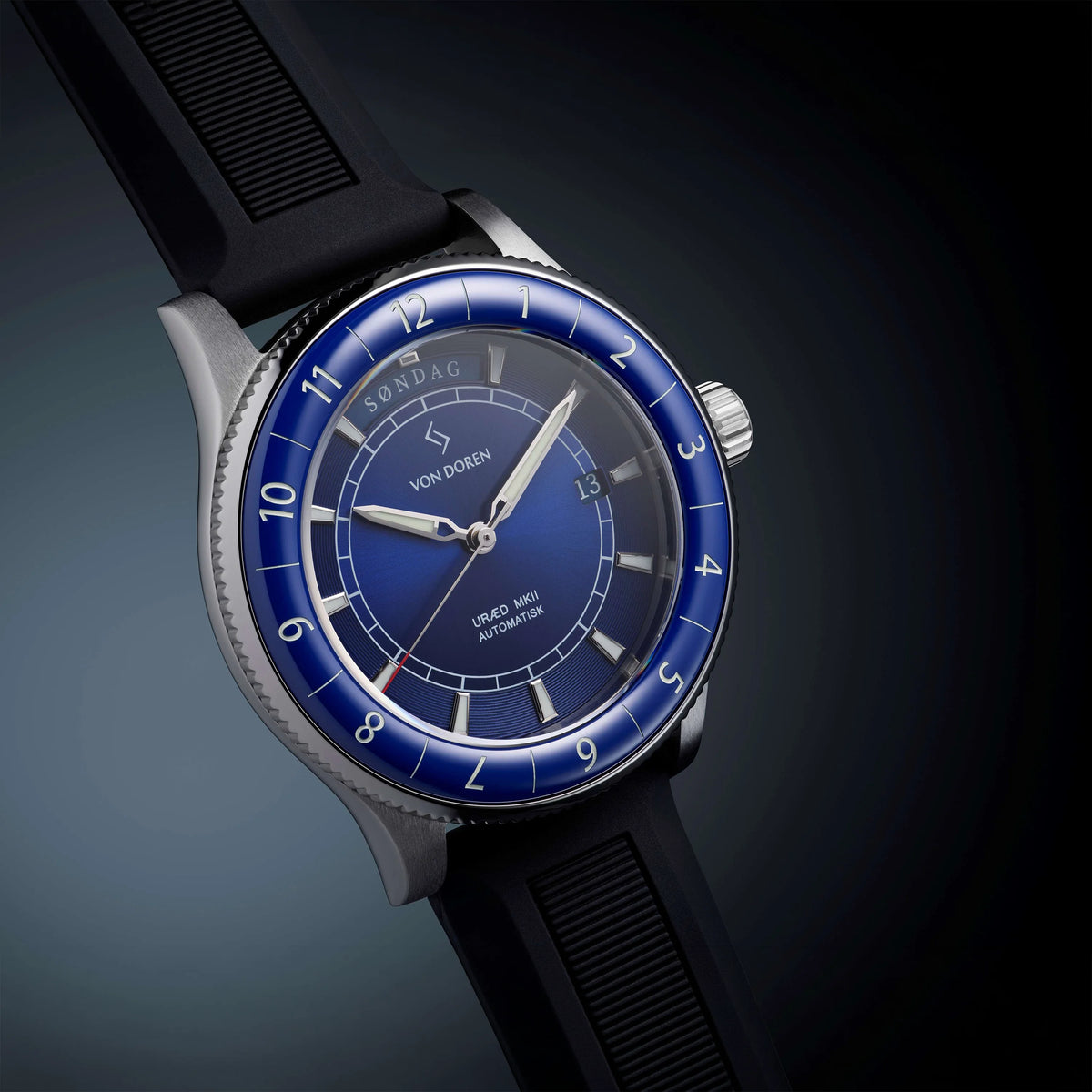
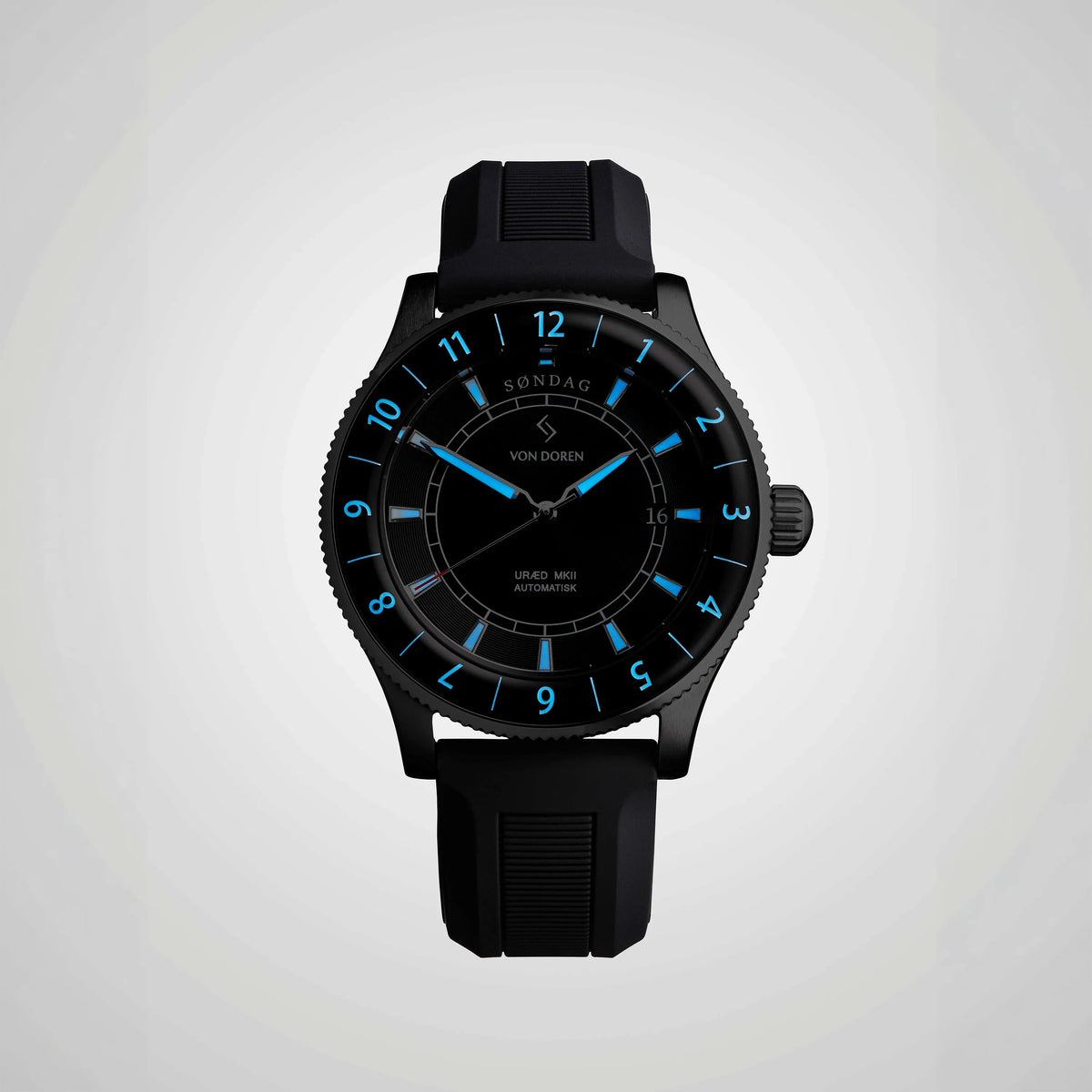

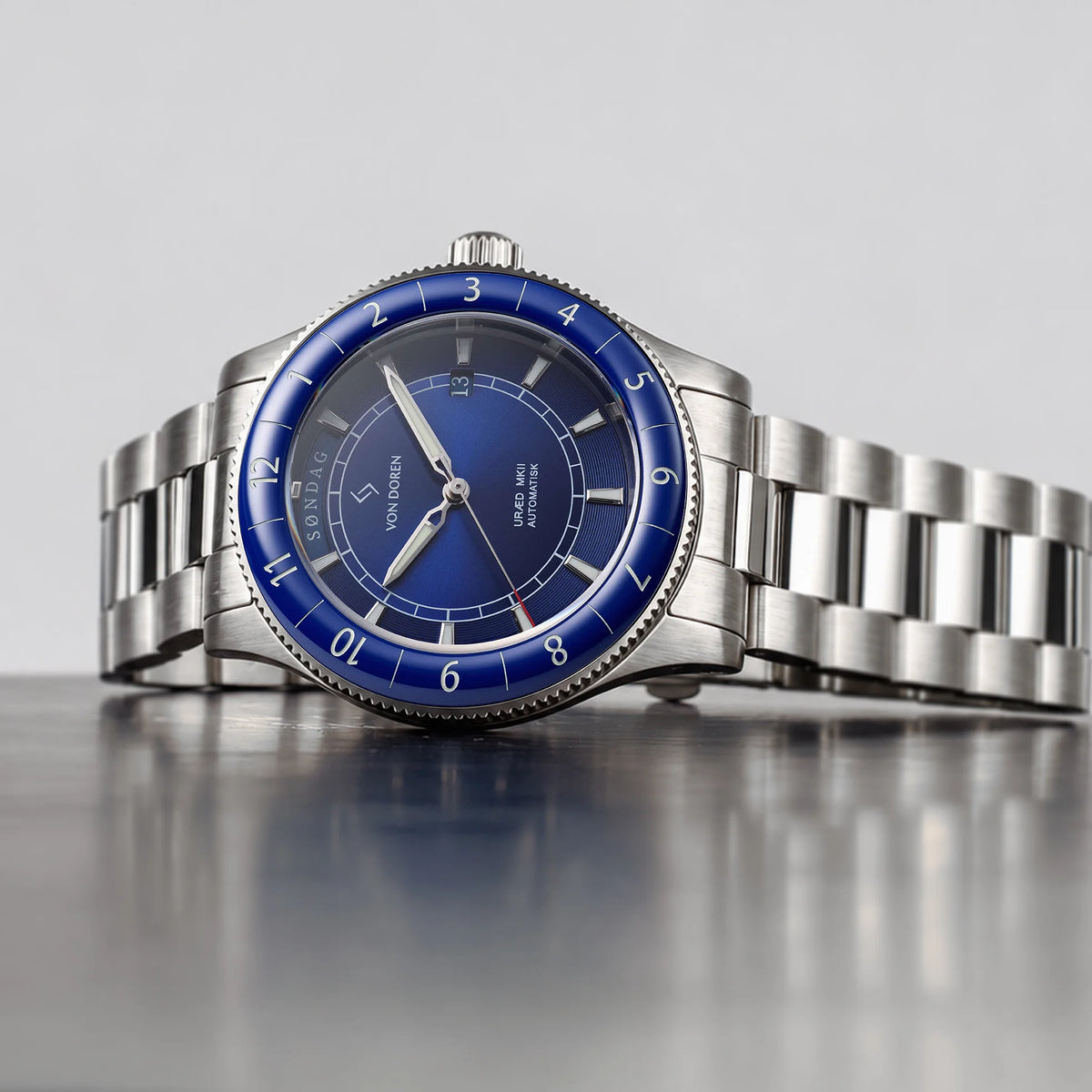

URÆD Mark II Day/Date - Atlantic Blue
Variasjoner:
Pre-order. Delivery in January 2027.
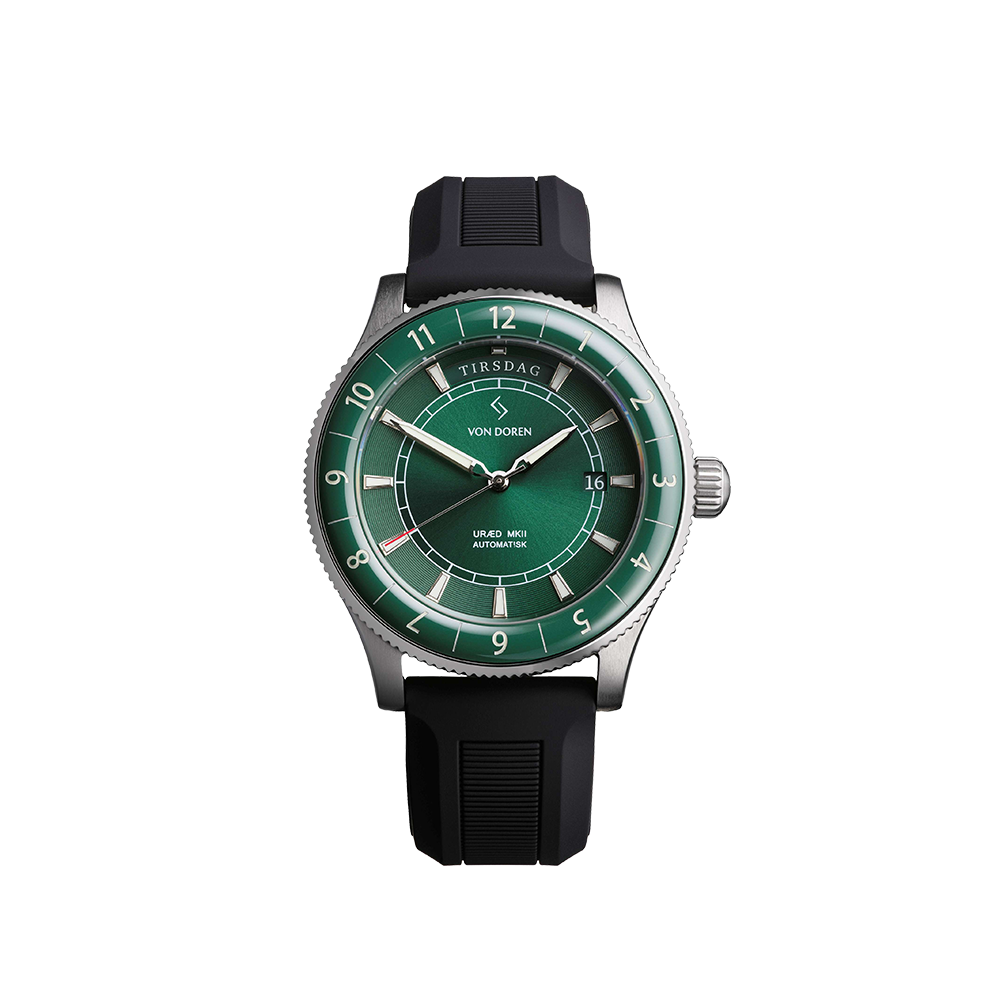
Atlantic Blue, a tribute to the ocean Ole Brude crossed. URÆD Mark II in blue captures the depth and power of the voyage that started it all.
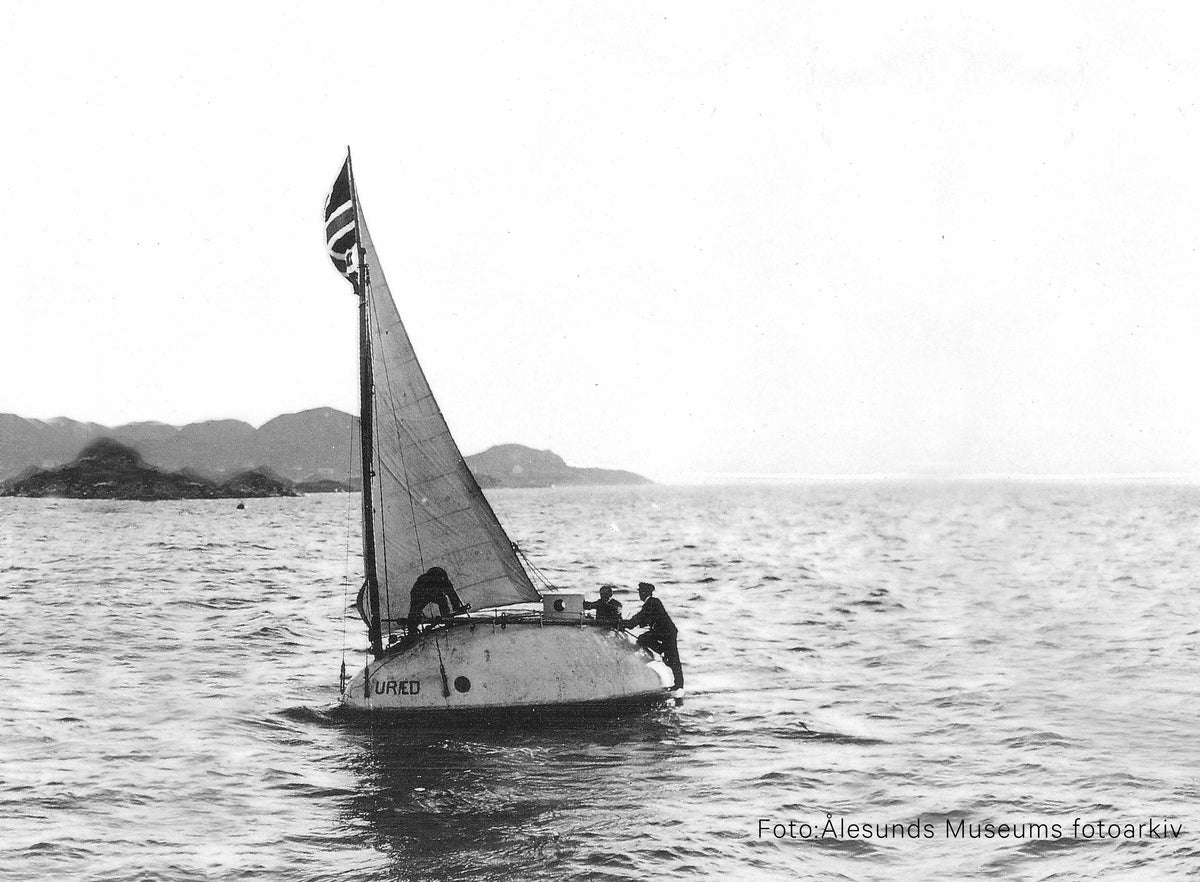
In 1904, Ålesund native Ole Brude crossed the Atlantic Ocean in an egg-shaped lifeboat he had designed and built himself. It was a voyage many believed could not be done. The lifeboat bore the name URÆD, meaning Fearless in Norwegian, and his invention has since helped save thousands of lives.
More than 120 years later, the story continues.
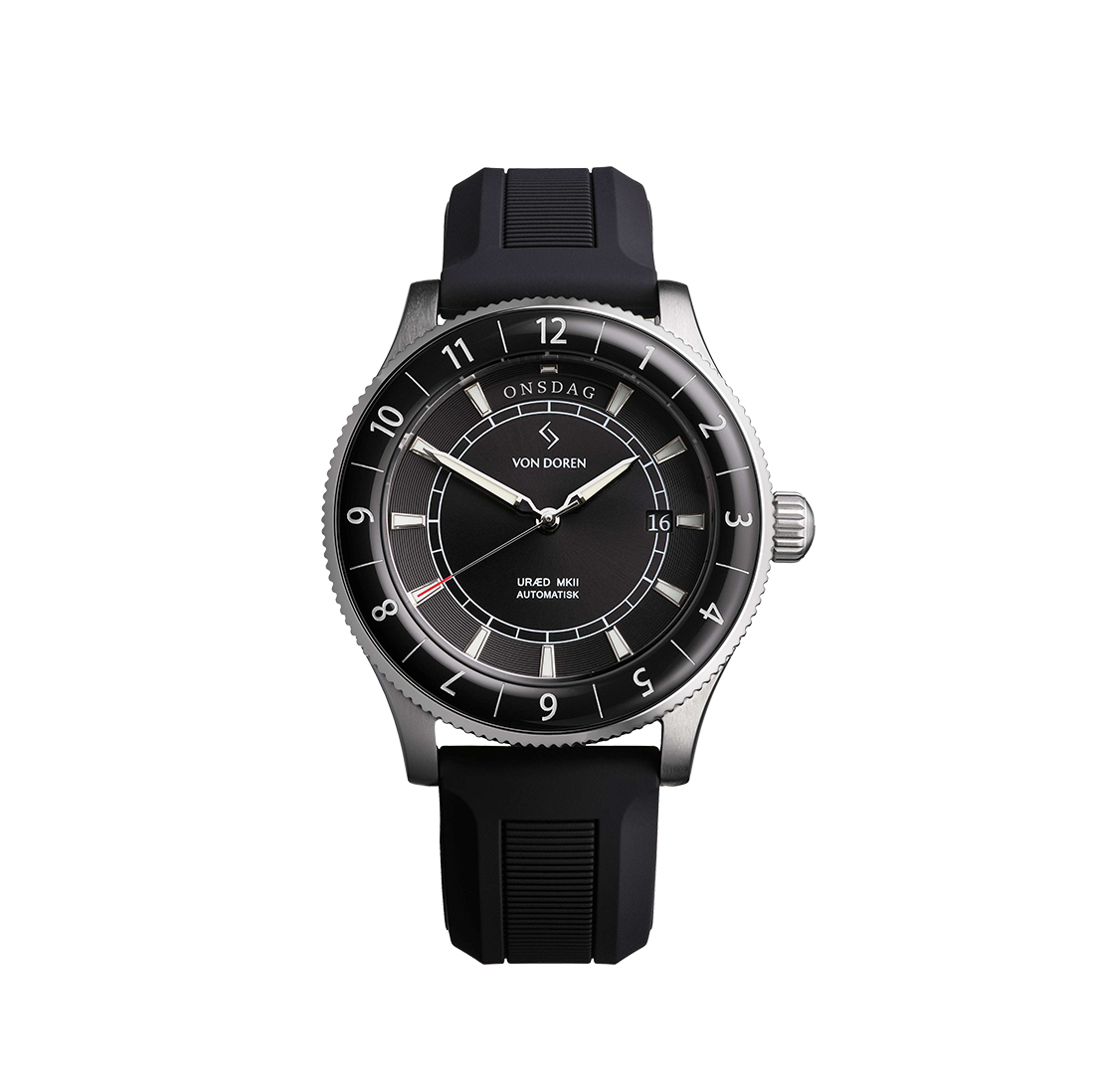
URÆD Mark II displays the days of the week in Norwegian, a detail that underlines the watch's Norwegian identity.
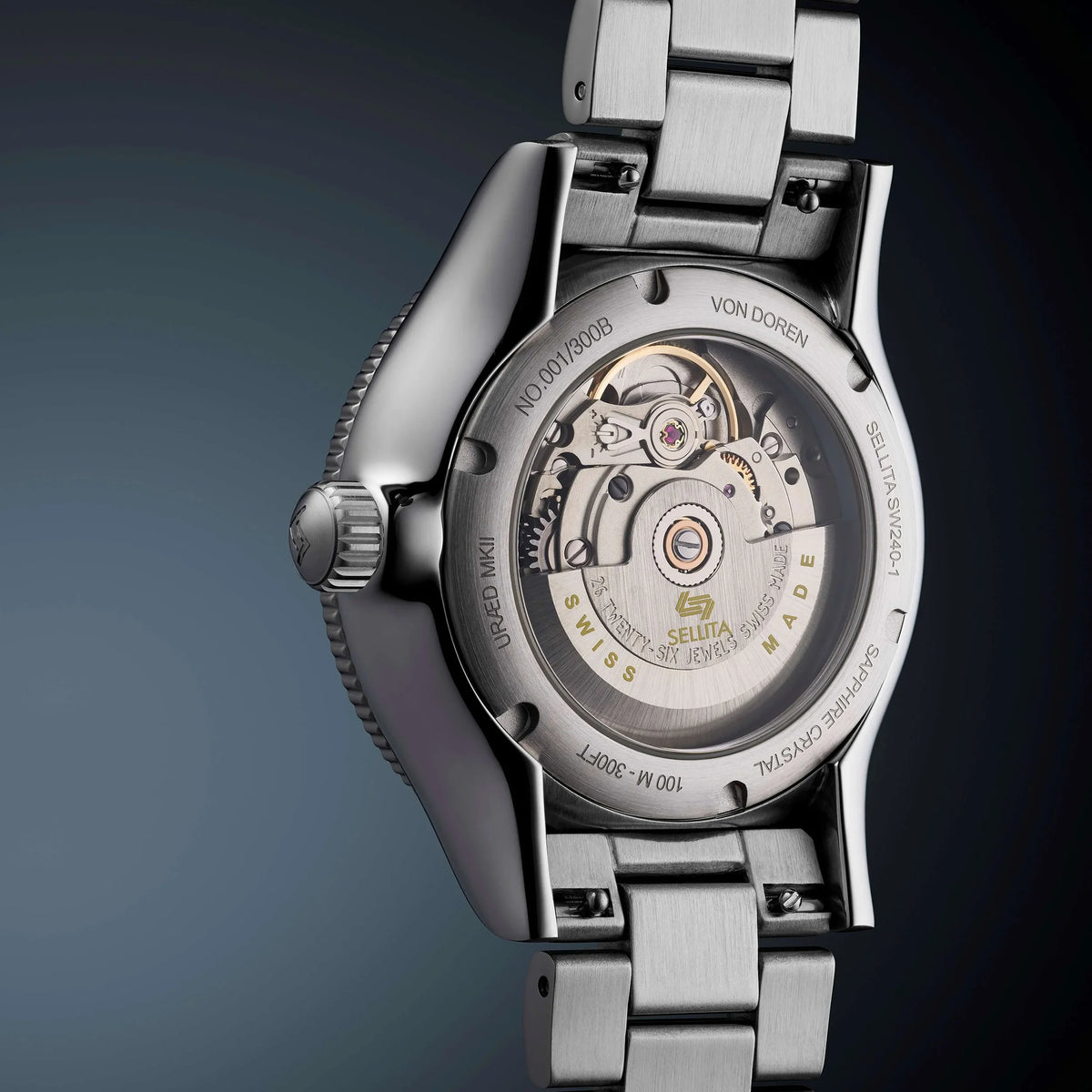
Inside beats a Swiss Sellita SW240-1 Elaboré automatic movement, visible through the sapphire crystal case back. Scratch-resistant sapphire crystal protects the dial, and the rotating ceramic bezel with a 12-hour scale lets you keep track of a second time zone. The watch is water resistant to 100 metres.
Delivered on a solid black rubber strap. A steel bracelet is available as an add on.
Each colour is produced in only 300 individually numbered pieces.
SPECIFICATIONS
- Dimensions:
Diameter: 40 mm
Thickness: 12.9 mm
Lug to lug: 46.6 mm - Movement: Sellita SW240-1 Elaboré, Swiss automatic movement
- Jewels: 26
- Day/date: Norwegian weekdays in a curved window at the top, date window at 3 o’clock
- Case: 316L stainless steel, brushed and polished
- Crystal: Sapphire crystal with anti-reflective coating
- Case back: Sapphire crystal with view of the movement
- Bezel: Ceramic, unidirectional
- Lume: Super-LumiNova BGW9 on bezel, hands and indices
- Power reserve: 38 hours
- Water resistance: 10 ATM / 100 metres
- Strap: Black rubber strap. Steel bracelet available as an option
- Lug width: 20 mm
WARRANTY
This watch comes with a 2-year warranty. The warranty covers manufacturing defects in the watch. The warranty does not apply to parts that have been affected by work performed by an unauthorized third party and/or damage caused by accidents.
Choose options
SWISS MADE Sellita SW240-1 Automatic
URVERK
Sellita SW240-1 is a Swiss automatic movement featuring both day and date displays. It is used by several renowned watch brands.
Automatic winding: The watch is powered by the natural movement of your wrist.
Day and date display: Shows both the day of the week and the date.
THE ORIGINS OF THE NORWEGIAN WEEKDAYS
Mandag (Monday)
Mandag is the day of the Moon. “Måne” is a Norse god, and the brother of “Sol”. The gods did not like that Måne’s father Mundilfare named him after the moon. Therefore they sentenced Måne to drag the moon across the sky every night.
Tirsdag (Tuesday)
Tirsdag is named after Tyr, the son of Odin and the god of war. Tuesdays were considered the best day for battles.
Onsdag (Wednesday)
Onsdag is named after the Allfather, Odin. Odin was the wisest and most powerful of all the gods. After the Norse mythology was replaced by Christianity, it was hard for the Christian priests to accept that one of the days was named after a pagan god. They tried to rename the day “Midtuke”, which means “middle of the week”. This was unsuccessful, however.
Torsdag (Thursday)
Torsdag is named after Tor (Thor), perhaps the most famous Norse god. This was the most sacred of all the days. Important meetings and assemblies should preferably begin on Thursdays. Thursdays were also believed to be the most powerful day for magic.
Fredag (Friday)
Fredag is the day of Frigg and Frøya. They were goddesses of love and fertility, and Friday was the day of love.
Lørdag (Saturday)
Lørdag is a modernisation of “Laugardagr”, which means “washing day”. Saturday was traditionally the correct day for ritual cleansing ceremonies.
Søndag (Sunday)
Søndag is the day of the Sun, and traditionally the first day of the week. “Sol” was Måne’s sister and was named after the sun. Just like with Måne, the gods did not approve of her father’s choice of name, and thus sentenced her to pull the real sun across the sky every day.
INSPIRATION
THE STORY OF URÆD
Some stories deserve to be told again.
In 1904, a young Norwegian inventor set out on a voyage that would challenge the era's understanding of safety at sea. With a groundbreaking lifeboat, an unshakeable belief in his own idea and the Atlantic Ocean ahead of him, Ole Brude set his course for America.
The boat was named URÆD.
More than 120 years later, the story lives on in URÆD Mark II.
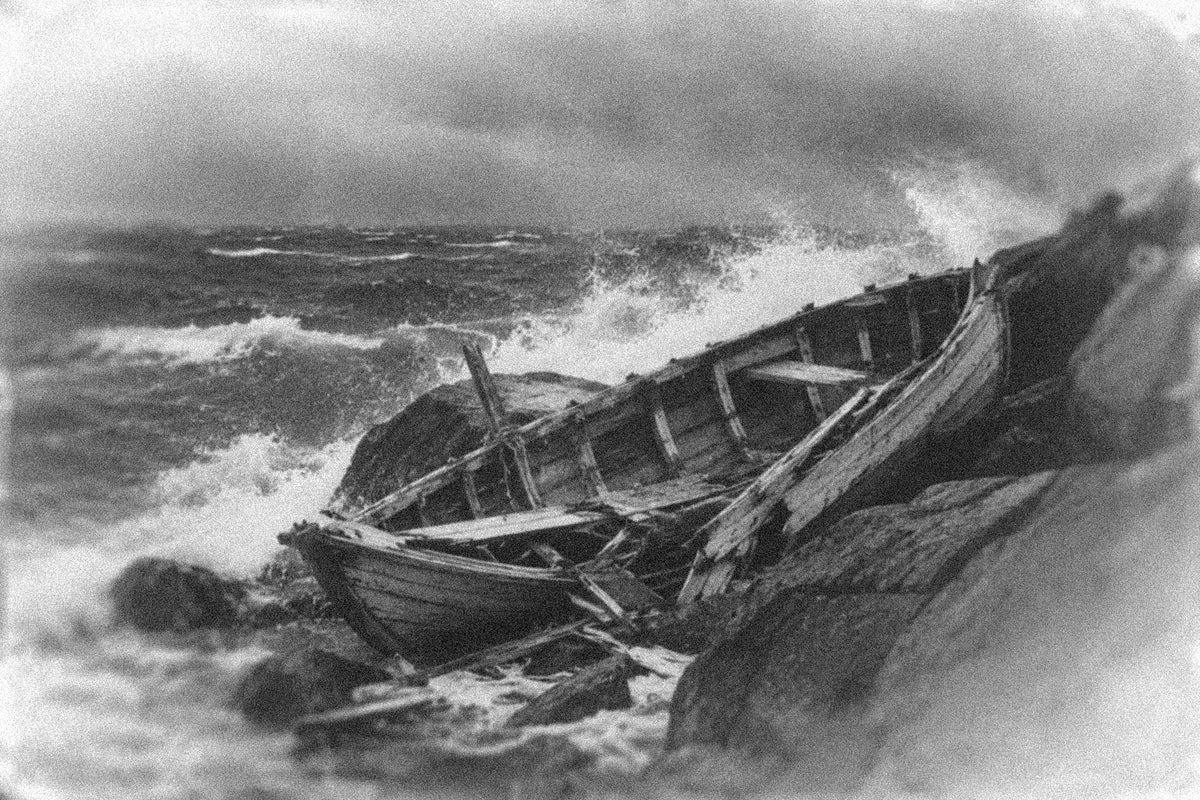
Ole Brude – the man who wanted to make the sea safer.
In the early 1900s, the sea was both a lifeline and a constant danger. Shipwrecks claimed countless lives, and the open lifeboats of the time offered little protection against cold, storms and high waves.
Ole Brude from Ålesund, West Norway believed there had to be a better solution.
He envisioned something entirely different from the traditional lifeboats: an enclosed design that could protect the people on board, even in extreme conditions.
The idea was as simple as it was revolutionary. Instead of fighting the forces of the sea, the lifeboat would be built to withstand them.
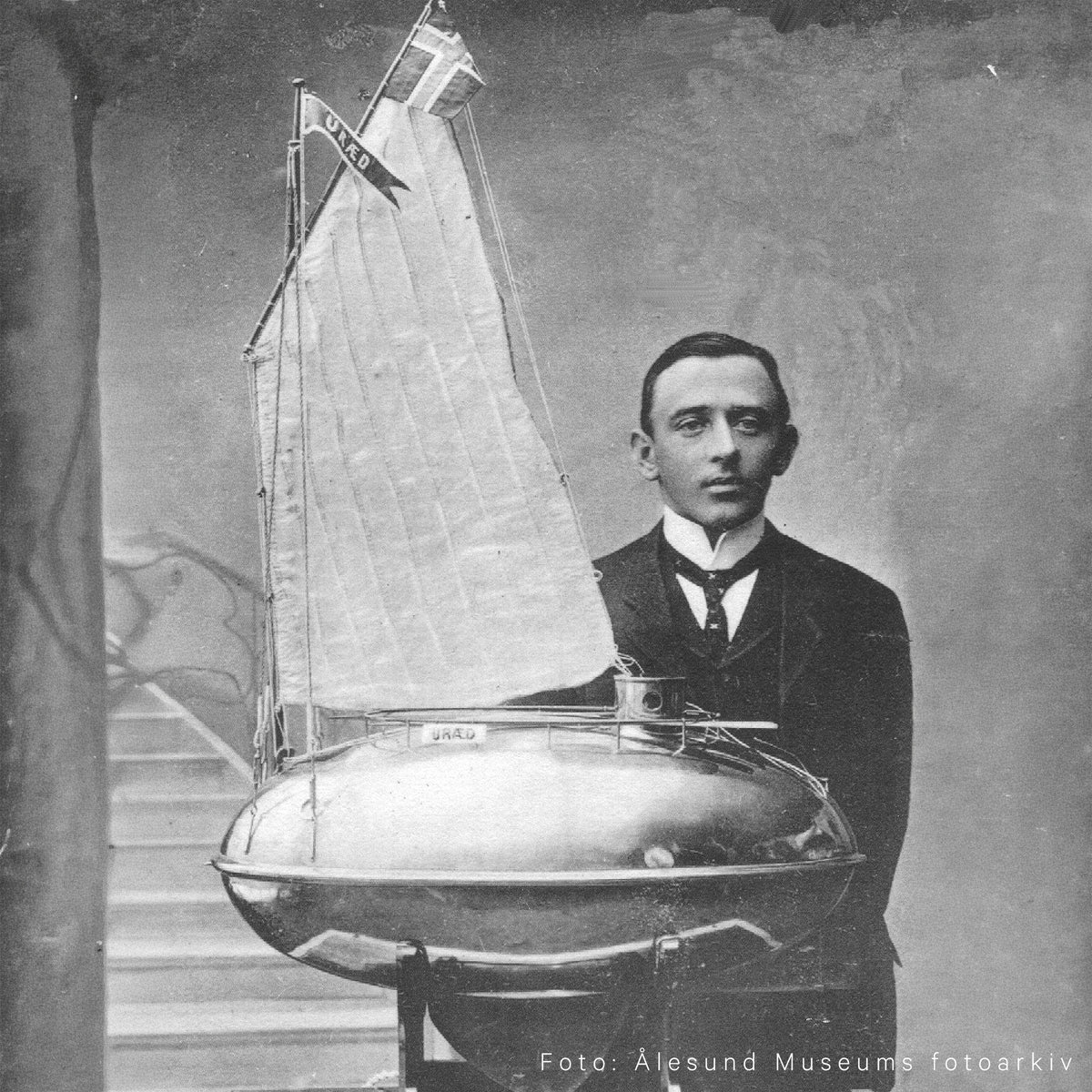
A vision takes shape.
Brude developed drawings and plans for an egg-shaped lifeboat built of steel. It was to be enclosed, robust and capable of keeping people safe through storms that would have left traditional lifeboats highly exposed.
But the road from idea to finished vessel was demanding.
Brude had to secure funding, convince others that the design was feasible and find a workshop that could build it.
In 1904, the boat was built at Aalesunds Mekaniske Verksted. That same year, Ålesund was struck by the great town fire, which contributed to delays in the project.
The result was a vessel the world had hardly seen the like of.
It was only 5.5 metres long and 2.4 metres wide, made of galvanised steel plates and equipped with a sail, a keel and a small lookout tower.
It was named URÆD.
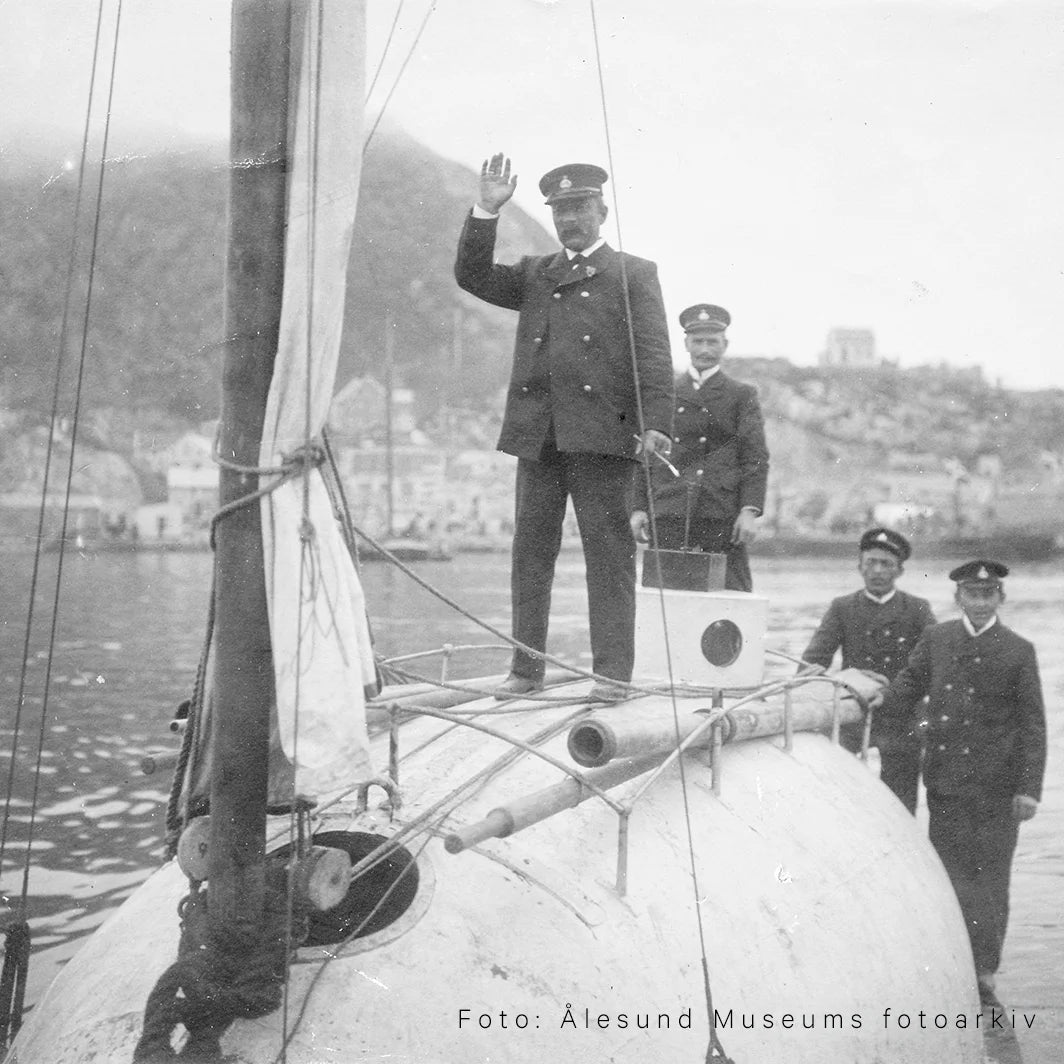
Four men. One lifeboat. An entire ocean.
Ole Brude did not simply want to present a new invention. He wanted to prove that it worked.
The plan was ambitious: he would sail URÆD from Ålesund to America, cross the North Atlantic and demonstrate the lifeboat's capabilities to the world.
On 7 August 1904, Brude and three crew members set out on the historic voyage.
They had no engine. Only a sail, navigational equipment, limited supplies and faith in a design that had never been tested before.
The crossing proved far tougher than expected.
Storms, enormous waves, illness and damage to the boat put both the crew and the invention to the test. Along the way, the mast broke, and the four men had to fight to keep the boat moving forward.
After more than three months at sea, they reached Newfoundland on 15 November. The voyage continued along the American coast before URÆD was driven ashore in a storm near Gloucester, Massachusetts, in January 1905.
The demanding journey had lasted about five months.
Brude had proven that the enclosed lifeboat could protect people through an extraordinary voyage across the Atlantic.
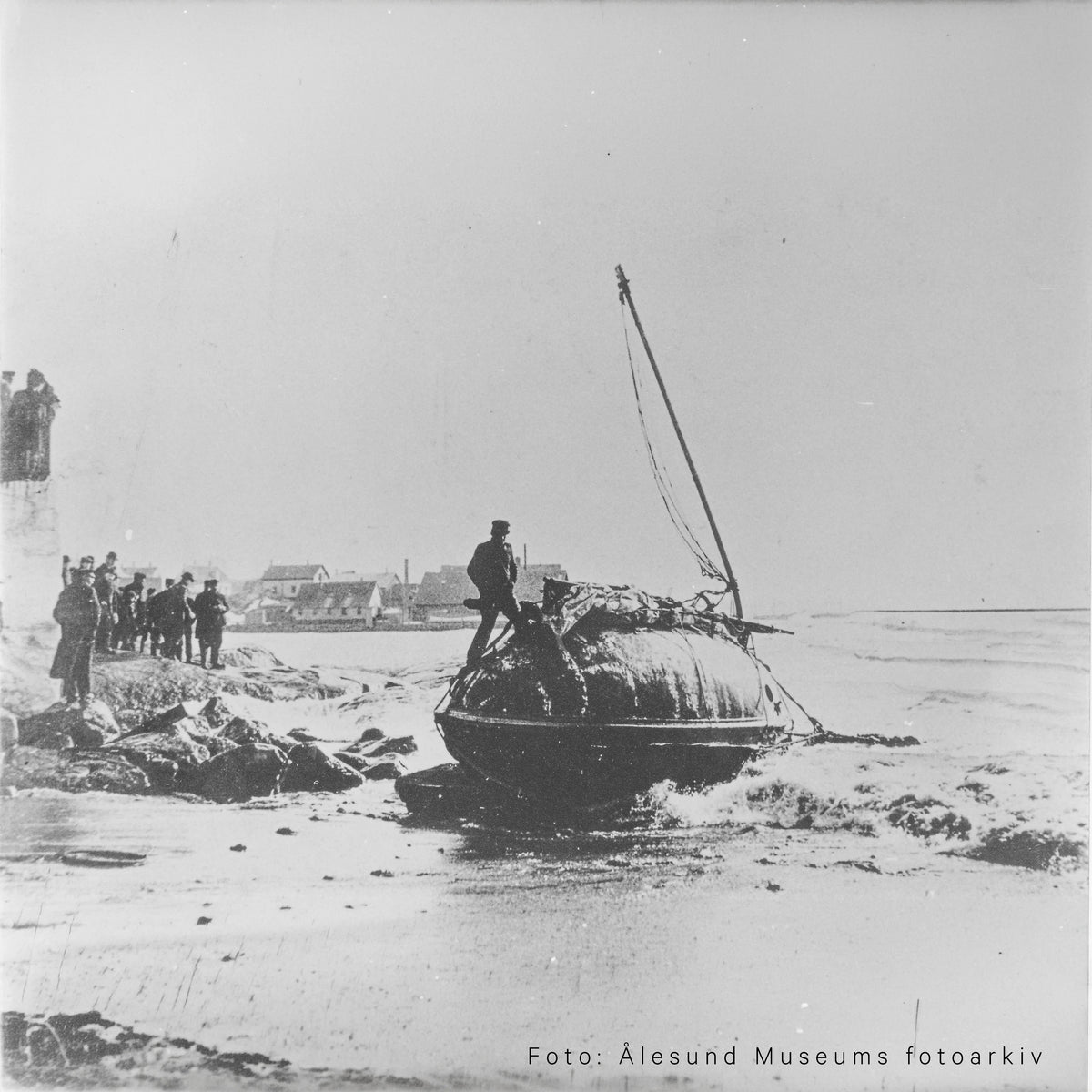
Ahead of its time.
An invention that pointed towards the lifeboats of the future.
Despite the remarkable crossing, Ole Brude's design did not achieve the breakthrough he had hoped for.
The idea was radical, production was costly, and the shipping industry was not ready for such a sweeping change.
But Brude's fundamental idea would prove to be far ahead of its time.
Only several decades later did enclosed lifeboats become common in international shipping.
Today, modern enclosed lifeboats are built on the same central principle: protecting people from the sea through a solid, enclosing design.
Ole Brude was a pioneer. URÆD was an early step towards the rescue vessels of the future.